.svg&w=256&q=75)

Next Gen Digital Transformation
Composable Enterprise Playbook: Modernize Legacy Systems Without Rebuilds


The Composable Enterprise Playbook: Modernize Legacy Systems Without a Rebuild with Composable Architecture Consulting

Legacy systems often become rigid monoliths that stifle innovation and slow down your time-to-market. Yet, a full rebuild comes with significant cost and risk. The Composable Enterprise Playbook reveals how modular, API-driven design, enhanced with AI-powered insights, can revitalize your infrastructure without a complete overhaul. This guide covers what a composable enterprise is and its core principles, proven strategies for modernization without rebuilding, tactics for API-first integration, the role of AI in transformation, real-world success stories, how to select the right partners, and key market trends. With composable architecture consulting at its heart, you'll find actionable steps to boost agility, slash technical debt, and gain a competitive edge—all powered by Future.Works’ AI-driven methodology and services.
What Is a Composable Enterprise and Why Does It Matter for Legacy Modernization?
A composable enterprise is an organizational and technical approach that assembles independent, interchangeable business capabilities to respond rapidly to market changes, thereby modernizing legacy systems without disruptive rewrites. By decoupling functionality into modular services, companies can rehost, replatform, or refactor individual components instead of rebuilding entire applications. For example, a retail firm might replace its monolithic checkout engine with a standalone payments microservice, reducing deployment cycles by up to 60 percent. This modular design directly addresses legacy constraints, paving the way for flexible updates and continuous integration pipelines. Understanding these principles sets the foundation for targeted modernization tactics that follow in subsequent sections.
What Are the Core Principles of Composable Architecture?
Composable architecture rests on three pillars—modularity, autonomy, and orchestration—that collectively enable rapid adaptation:
Modularity: Business capabilities exist as self-contained units that perform a specific function and can be updated or replaced independently.
Autonomy: Each component maintains its own data model and lifecycle, eliminating cross-team dependencies.
Orchestration: A lightweight layer coordinates interactions between modules, ensuring they collaborate seamlessly.
These principles drive business agility by empowering teams to innovate without waiting on monolithic release cycles, and they directly support legacy modernization by isolating risks to individual units.
How Do Packaged Business Capabilities (PBCs) Enable Business Agility?
Packaged Business Capabilities (PBCs) are prebuilt, domain-specific services that encapsulate discrete functions—such as order management or customer identity—allowing enterprises to assemble applications dynamically.
Before listing, here is why PBCs matter: they act as building blocks for rapid feature deployment, reduce duplicated code, and foster consistent governance across domains.
Consistent API Contracts: Each PBC exposes standardized interfaces, simplifying integration.
Independent Scaling: Teams can scale high-traffic capabilities without impacting the entire system.
Plug-and-Play Replacements: Legacy modules can be swapped for modern PBCs with minimal disruption. By leveraging PBCs, organizations gain the flexibility to evolve in incremental steps, which directly improves modernization outcomes by containing changes to discrete capabilities. This approach naturally leads into the broader benefits of composability.
What Are the Key Benefits of Adopting a Composable Enterprise Model?
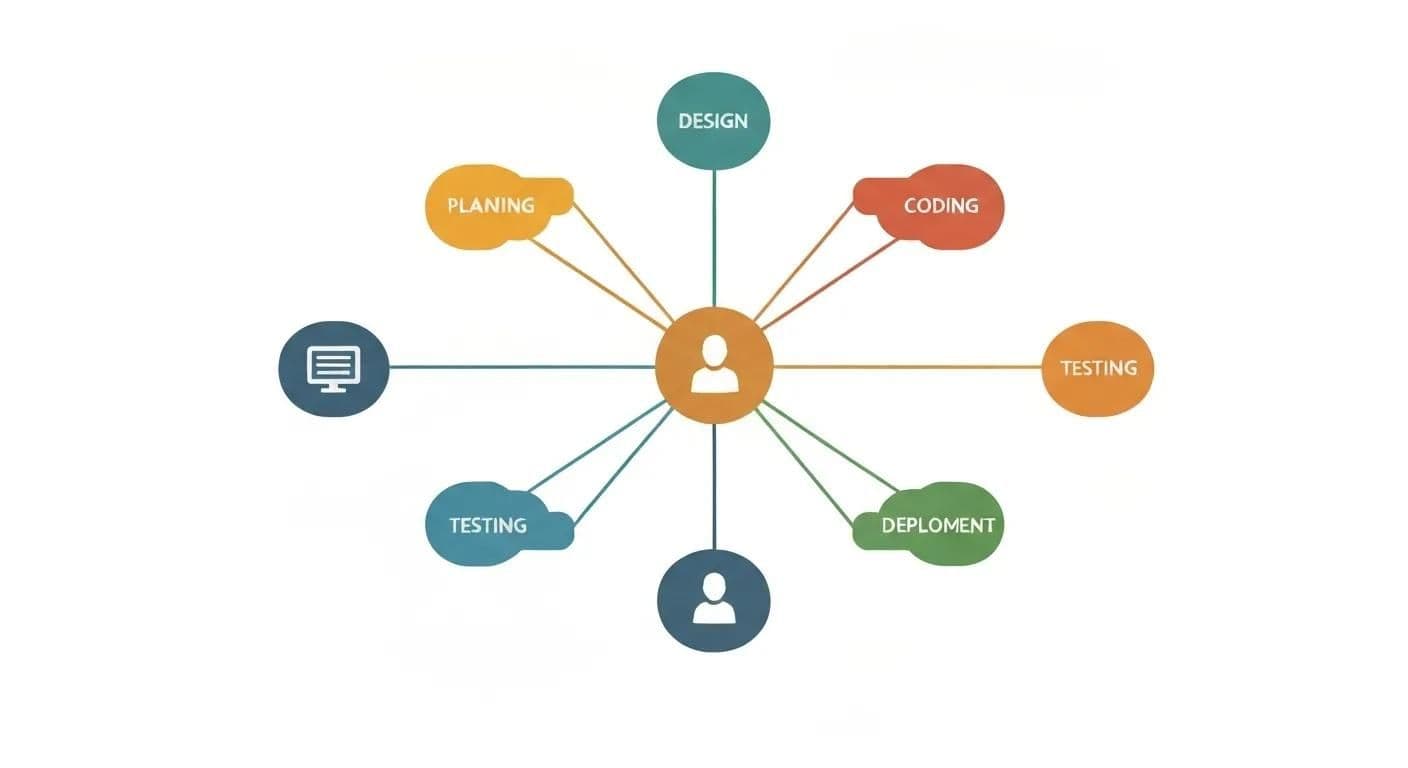
Adopting a composable enterprise delivers four primary advantages:
-
Accelerated Time-to-Market – Modular updates reduce feature delivery cycles by up to 80 percent as predicted by Gartner.
-
Enhanced Scalability – Independent components can elastically scale based on demand without affecting unrelated services.
-
Improved Resilience – Fault isolation ensures a single service failure does not cascade across the entire platform.
-
Continuous Innovation – Autonomous teams deploy new capabilities without coordination bottlenecks.
These benefits collectively drive ROI, lower maintenance costs, and reduce technical debt while preserving existing investments—a transition made feasible by non-rebuild modernization tactics.
How Does Composable Architecture Differentiate from Monolithic Systems?
Before comparing, it’s essential to understand that monolithic systems bundle UI, business logic, and data layers within a single deployable artifact, creating tight coupling and upgrade risks. Monolithic applications require coordinated releases and extensive regression testing, whereas composable ecosystems enable continuous delivery for each modular piece. Recognizing this difference underlines why composability matters for legacy modernization without a full rebuild.The modular nature of composable enterprises sets the stage for targeted legacy strategies that minimize disruption while maximizing business value.
What Are the Proven Strategies for Legacy System Modernization Without a Rebuild?
Modernization without a ground-up rewrite preserves core business logic and minimizes downtime by applying focused techniques that adapt legacy assets to a composable framework.
How Does Rehosting and Replatforming Support Modernization?
Rehosting migrates legacy applications to modern infrastructure—such as container platforms or cloud VMs—without altering code, while replatforming makes minimal adjustments to leverage new environments (e.g., database engines or middleware updates).
Entity → Attribute → Value Legacy Application → Deployment Model → Containers or Cloud VMsDatabase Tier → Engine Upgrade → Managed Cloud ServiceMiddleware → Patch Level → Optimized Performance
By relocating workloads to agile platforms, teams gain improved scalability and cost-efficiency, creating a less disruptive path toward composability and setting up components for later refactoring or API integration.
What Is Refactoring and How Does It Improve Legacy Systems?
Refactoring restructures existing code to reduce complexity, remove dead code, and modularize functions without changing external behavior. This process unlocks component boundaries necessary for composable design.
Refactoring delivers these advantages:
-
Enhanced Maintainability – Cleaned code paths facilitate faster troubleshooting.
-
Clear Interfaces – Well-defined module boundaries emerge for API extraction.
-
Performance Gains – Dead code removal and optimized logic boost throughput.
Refactored modules form the basis for independent deployment pipelines that align with composable principles.
How Does API-Driven Integration Enable Seamless Legacy Modernization?

API-first integration encapsulates legacy functions behind service interfaces, making them accessible to modern components without exposing internal monolithic logic.Core benefits include:
-
Interoperability – Unified APIs bridge legacy and modern microservices.
-
Reusability – Standardized endpoints support multiple client applications.
-
Scalable Integration – API gateways manage traffic, security, and versioning.
By wrapping legacy code in well-designed APIs, organizations gradually migrate to composable architectures while maintaining continuous operations.
Why Is Encapsulation Important in Legacy System Modernization?
Encapsulation shields intricate legacy implementations behind well-defined interfaces, reducing coupling and preventing direct access to underlying code.Key outcomes:
-
Protected Assets – Business rules remain intact and secure.
-
Controlled Evolution – Internal changes do not impact consuming services.
-
Regulatory Compliance – Sensitive data handling stays centralized.
This layer of abstraction accelerates risk-managed modernization without overhauling entire systems, leading naturally into a balanced view of trade-offs.
What Are the Risks and Benefits of Modernizing Without a Complete Rebuild?
Modernizing in place carries both strategic benefits and operational risks:
Benefits:
- Cost Savings – Avoids full redevelopment expenses.
- Reduced Disruption – Core functions remain live.
- Faster ROI – Incremental improvements deliver value sooner.
Risks:
- Technical Debt Carryover – Untouched legacy code may still limit capabilities.
- Integration Complexity – Layering modern and legacy interfaces requires meticulous governance.
- Performance Constraints – Some bottlenecks persist until deeper refactoring occurs.
Balancing these factors through a structured playbook ensures risks are mitigated while maximizing modernization advantages.
How Does API-First Integration Drive Composable Enterprise Agility?
Yes, API-first integration is essential because it establishes a unified communication layer that underpins composable architectures and legacy modernization.
What Are the Principles of API-First Design in Enterprise Systems?
API-first design treats service contracts as primary deliverables, ensuring interfaces are finalized before internal implementations. This approach guarantees consistency, documentation accuracy, and developer alignment.
-
Contract-Driven Development – Define request/response schemas ahead of code.
-
Version Management – Embed versioning strategies into API lifecycle.
-
Discoverability – Catalog APIs in a centralized developer portal.
API-First Design Principles
API-first design emphasizes treating APIs as core products, ensuring they are thoughtfully planned and developed before client applications are built [18]. This approach promotes better communication and coordination between teams, leading to faster delivery and improved product quality [18].
Hey Reliable (2023-09-28)
This research supports the article's claims about the principles of API-first design.Adhering to these guidelines accelerates integration across composable modules.
How Do APIs Enable Interoperability and Scalability in Composable Architectures?
APIs act as the lingua franca connecting heterogeneous services, enabling:
-
Data Exchange – Real-time sharing between legacy and microservices.
-
Horizontal Scaling – Stateless API endpoints scale independently under load.
-
Reusability – A single API can serve web, mobile, and third-party needs.
Interoperability through APIs directly supports autonomous module deployments and global scalability—a cornerstone of composable enterprises.
What Role Do API Gateways and Management Play in Integration?
API gateways provide centralized traffic control, security enforcement, and observability for all service calls
By leveraging API management, organizations gain the governance and insights required to scale composable ecosystems securely and efficiently.
How Does API-First Support Microservices and Headless Architectures?
API-first design underpins microservices by exposing small, purpose-built services via clear interfaces, and enables headless architectures by decoupling backends from frontends.
Microservices: Fine-grained services communicate exclusively via APIs, fostering independent evolution.
Headless: Content and functionality are delivered through APIs to multiple presentation layers (web, mobile, IoT).
This synergy accelerates modernization by progressively unbundling monoliths into composable services that drive digital experiences.
What Role Does AI Play in Digital Transformation and Legacy Modernization?
AI powers data-driven insights, automation, and predictive capabilities that accelerate composable transformations and reduce manual effort in legacy environments.
How Is AI Used for Legacy System Analysis and Optimization?
AI-driven code analysis tools automatically scan legacy codebases to identify complexity hotspots, unused modules, and security vulnerabilities.Example use cases:
-
Automated Refactoring Suggestions – Machine learning models recommend code improvements.
-
Predictive Maintenance – Anomaly detection forecasts system failures before downtime.
-
Dependency Mapping – Graph algorithms trace module relationships to plan extraction.
By applying AI to analysis, teams prioritize modernization targets effectively before subsequent rehosting or API wrapping.
AI in Legacy System Analysis and Optimization
AI can be used to analyze historical and real-time data within legacy systems to uncover actionable insights, improving customer experience through personalization and predictive models [14]. AI-driven code analysis tools can automatically scan legacy codebases to identify complexity hotspots, unused modules, and security vulnerabilities [11]
Trigyn Technologies (2024-11-21)
This research supports the article's claims about the role of AI in legacy system analysis and optimization.
What Are Examples of Intelligent Automation in Composable Workflows?
Intelligent automation integrates AI with workflow engines to streamline routine tasks:
Robotic Process Automation (RPA) enhanced with NLP for legacy UI interactions.
Automated Testing uses AI to generate and execute regression suites across modules.
ChatOps bots orchestrate deployments, enabling self-service for developers.
These AI-powered automations reduce manual toil and speed up iterative releases in composable landscapes.
How Does Predictive Analytics Enhance Business Agility in Modern Enterprises?
Predictive analytics extracts actionable patterns from operational data, enabling By forecasting trends and anomalies, enterprises align composable modules with real-time business needs—boosting responsiveness and competitiveness.
How Does AI Integration Reduce Risks and Accelerate Modernization?
AI integration reduces modernization risks by providing:
-
Validation – Automated tests ensure new APIs meet performance criteria.
-
Compliance Checks – NLP-powered audits flag regulatory issues early.
-
Performance Tuning – Reinforcement learning optimizes microservice resource usage. As a result, AI not only accelerates modernization cycles but also safeguards quality and reliability across composable transformations
What Are Real-World Case Studies Demonstrating Modernization Without a Rebuild?
Organizations across finance and manufacturing have unlocked substantial value by applying composable modernization playbooks without full rewrites.
How Have Finance and Manufacturing Sectors Benefited from Composable Modernization?
- In finance, a global bank encapsulated its legacy payments engine behind APIs, reducing settlement times by approximately 50 percent.
- A manufacturing firm refactored its inventory control into microservices and leveraged AI-based demand forecasting, cutting stock-outs by around 30 percent.
These sector-specific successes illustrate how modular upgrades can deliver rapid efficiency gains and improved customer experiences.
What Quantifiable Outcomes Prove the ROI of Non-Rebuild Modernization?
- Cost Reduction – Up to 40 percent savings in operational expenses by migrating to cloud-native PBCs.
- Time-to-Market – Up to 70 percent faster deployment of new features through API-driven pipelines.
- System Uptime – Around 20 percent improvement in availability by isolating component failures. These figures demonstrate that modernization without rebuilds yields measurable returns in both financial and operational dimensions.
How Has AI Enhanced These Modernization Success Stories?
- Accelerated Code Refactoring – AI tools reduced code review times by up to 60 percent.
- Optimized Resource Allocation – Predictive models cut cloud spend by approximately 25 percent through dynamic scaling.
- Improved Compliance Posture – NLP-based audits detected over 90 percent of potential regulatory violations before deployment. AI’s involvement amplifies business agility and reinforces the composable enterprise’s ability to evolve continuously.
How to Choose the Right Composable Architecture Consulting Partner for Legacy Modernization?
Selecting an expert consulting partner is crucial to navigate the complexity of composable modernization and achieve predictable outcomes.
What Criteria Should B2B Clients Use to Evaluate Consulting Firms?
When evaluating firms, consider:
- Proven Methodology – A structured playbook for incremental modernization.
- Sector Experience – Case studies in mission-critical industries like finance, healthcare, or manufacturing.
- AI Competency – Demonstrated use of AI for analysis, automation, and predictive insights.
- API Expertise – Track record of implementing API-first integration and management.
These criteria ensure the partner can deliver end-to-end guidance from strategy through implementation.
How Does Future.Works Approach Composable Enterprise Consulting Differently?
Future.Works combines AI-powered analytics with deep composable architecture expertise to accelerate modernization without rebuilding monoliths. By leveraging proprietary machine learning models for code analysis and predictive maintenance, our composable architecture consulting services identify high-impact modernization targets and automate migration tasks. This unique methodology consistently reduces risk, shortens timelines, and maximizes ROI compared to conventional approaches.
What Services Are Included in Comprehensive Legacy Modernization Consulting?
Comprehensive services encompass:
- Assessment & Roadmapping – AI-driven audits of existing systems and modernization blueprints.
- Rehosting/Replatforming – Cloud migration and containerization strategies.
- Refactoring & API Wrapping – Code restructuring and service encapsulation.
- API-First Integration – Gateway implementation, governance, and developer portal setup.
- Intelligent Automation – RPA, automated testing, and deployment orchestration.
- Ongoing Optimization – Predictive analytics for performance tuning and cost control.
These end-to-end offerings ensure a seamless journey from legacy constraints to composable agility. Learn more on our Services page.
How Can Clients Engage and Start Their Modernization Journey?
To begin, schedule a discovery session with Future.Works’ transformation architects to assess your current state and define target outcomes. Our collaborative workshops rapidly produce tailored modernization roadmaps, delivered alongside AI-powered feasibility analyses. From there, phased implementation ensures immediate value while preserving core business operations.
What Are the Market Trends and Future Outlook for Composable Enterprises and Legacy Modernization?
As enterprises seek faster innovation cycles, the composable applications market is experiencing rapid growth and evolving alongside AI capabilities.
How Is the Composable Applications Market Growing Globally?
The composable applications market is projected to expand from USD 7.55 billion in 2025 to approximately USD 31.50 billion by 2034, representing a CAGR of about 17.2 percent. Increased adoption in sectors such as financial services and retail underscores the shift toward modular, API-centric platforms.
Composable Applications Market Growth
The composable applications market is projected to grow significantly, with forecasts estimating a rise from USD 7.55 billion in 2025 to approximately USD 31.50 billion by 2034, representing a CAGR of 17.20% [24]. This growth is driven by the increasing need for rapid customization and scalability Precedence Research (2024)
This research supports the article's claims about the market trends and future outlook for composable enterprises.
What Are Gartner’s Predictions for Composable Architecture Adoption?
Gartner forecasts that by 2025, 50 percent of new enterprise applications will be delivered as Packaged Business Capabilities, up from approximately 30 percent in 2023. Organizations leveraging composable design are expected to outpace peers by up to 80 percent in feature release velocity.
How Is AI Driving the Evolution of Digital Transformation?
AI is fueling the next wave of composable innovation by automating service discovery, security enforcement, and performance tuning. Generative AI models are being trained to generate API definitions, while reinforcement learning optimizes microservice resource allocation, further cementing composable enterprises as self-evolving systems.
Why Is Modernizing Legacy Systems Without a Rebuild Becoming Essential?
Rising technical debt, cloud-native imperatives, and customer demands for seamless experiences make non-rebuild modernization a strategic necessity. By embracing composable architectures, enterprises reduce sunk costs, accelerate delivery, and maintain operational continuity—ensuring they remain competitive in rapidly shifting markets.
Early adoption of composable strategies yields lasting agility and innovation leadership. As the market accelerates, companies that modernize in place with API-first and AI-driven techniques will capture disproportionate value. Embrace the Composable Enterprise Playbook today to transform legacy constraints into modular foundations for sustainable growth.