.svg&w=256&q=75)


Digital Twin Strategy: From Concept to Enterprise ROI
Digital twins have moved well beyond their origins in aerospace engineering. Today, they represent one of the most powerful convergence points for IoT, AI, and simulation technology in enterprise operations. Yet for every organization successfully running digital twins in production, dozens more are stuck in conceptual discussions, unsure how to move from an intriguing idea to a deployed system that delivers measurable returns.
The gap is not technological. The components exist: sensor networks are mature, cloud compute is elastic, simulation engines are accessible, and AI models can learn from twin-generated data. The gap is strategic. Organizations lack a clear architecture blueprint, a phased maturity model, and a rigorous ROI framework that connects digital twin investments to business outcomes.
This guide provides all three.
What Digital Twins Actually Are (Beyond the Buzzword)
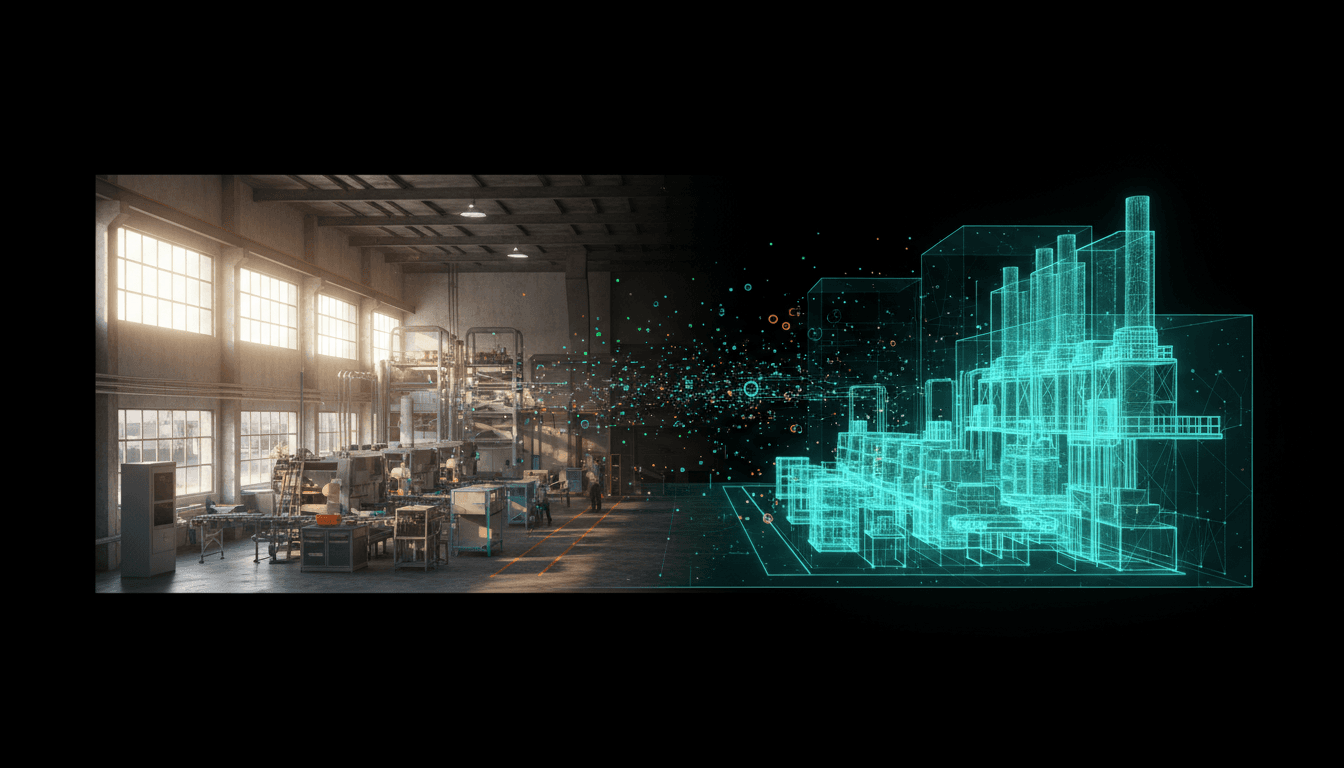
A digital twin is a dynamic virtual representation of a physical asset, process, or system that is continuously updated with real-world data and can be used for simulation, analysis, and decision support. The key differentiators from traditional simulation or 3D modeling are:
- Bidirectional data flow: Digital twins receive live data from their physical counterparts and can push insights or commands back to physical systems.
- Temporal continuity: Unlike one-time simulations, digital twins persist and accumulate state over the lifecycle of the physical entity they represent.
- Multi-physics fidelity: Enterprise-grade twins model multiple interacting physical phenomena (thermal, mechanical, electrical, fluid dynamics) simultaneously.
- AI-augmented reasoning: Modern digital twins embed machine learning models that learn from historical twin data to improve predictions and prescriptions over time.
A static 3D model of a factory floor is not a digital twin. A dashboard showing sensor readings is not a digital twin. A digital twin combines the structural model, the live data stream, the physics simulation, and the AI layer into a single coherent system that mirrors reality closely enough to make decisions against.
The Digital Twin Architecture Stack
Enterprise digital twins require a layered architecture. Each layer has distinct technology requirements and integration points.
Layer 1: Physical and IoT Layer
This is the instrumentation layer. It includes sensors (vibration, temperature, pressure, flow, position), edge gateways that aggregate and preprocess sensor data, and connectivity infrastructure (5G, LPWAN, industrial Ethernet). The quality of your digital twin is fundamentally bounded by the quality and coverage of your instrumentation. Gaps in sensor coverage create blind spots in the twin that no amount of AI can compensate for.
Layer 2: Data Ingestion and Storage Layer
Raw sensor data must be ingested at scale, often millions of data points per second for large industrial installations. This layer includes stream processing engines (Kafka, Pulsar, Kinesis), time-series databases optimized for high-frequency writes and range queries, and a data lake that stores raw and processed data for historical analysis and model training. Data lineage and quality monitoring are critical here; corrupt or delayed data propagates errors through the entire twin.
Layer 3: Simulation and Modeling Layer
This is the computational core of the twin. It includes physics-based simulation engines (finite element analysis, computational fluid dynamics, discrete event simulation), statistical and machine learning models trained on twin data, and hybrid models that combine physics-based first principles with data-driven learning. The simulation layer must run fast enough to support real-time decision-making while maintaining sufficient fidelity to be trustworthy.
Layer 4: Visualization and Interaction Layer
The visualization layer renders the twin in a form that human operators and automated systems can interact with. This ranges from 2D dashboards and 3D web viewers to immersive AR/VR environments for maintenance technicians. The interaction layer also includes APIs that allow external systems (ERP, MES, SCADA, planning tools) to query the twin and receive predictions or recommendations.
Layer 5: Intelligence and Optimization Layer
The top layer applies AI and optimization algorithms to the twin to generate actionable insights. This includes anomaly detection (identifying deviations from expected behavior), predictive models (forecasting failures, demand, or performance), prescriptive analytics (recommending optimal actions), and reinforcement learning agents that can explore strategies in the simulated twin environment before deploying them to physical systems.
Digital Twin Maturity Model
Not every organization needs a fully autonomous prescriptive twin on day one. Digital twins evolve through four maturity stages, and each stage delivers value independently.
Stage 1: Descriptive Twin
The descriptive twin answers the question: "What is happening right now?" It provides a real-time, data-enriched view of the physical asset or process. Value at this stage comes from visibility. Operators can see conditions they could not previously monitor, identify anomalies through visual inspection of the twin, and correlate events across subsystems.
Stage 2: Diagnostic Twin
The diagnostic twin answers: "Why did this happen?" It adds root cause analysis capabilities by correlating historical data patterns with known failure modes and operational events. Value at this stage comes from faster troubleshooting, reduced mean time to resolution, and systematic knowledge capture that reduces dependency on individual experts.
Stage 3: Predictive Twin
The predictive twin answers: "What will happen next?" It uses machine learning models trained on historical twin data to forecast equipment failures, production bottlenecks, energy consumption, and other operationally critical variables. Value at this stage comes from proactive intervention. Replacing reactive maintenance with predictive maintenance alone typically reduces unplanned downtime by 30 to 50 percent.
Stage 4: Prescriptive Twin
The prescriptive twin answers: "What should we do?" It combines predictive models with optimization algorithms to recommend specific actions. At full maturity, prescriptive twins can autonomously adjust operating parameters within defined safety envelopes. Value at this stage comes from continuous optimization of throughput, energy efficiency, quality, and safety.
Industry Use Cases
Manufacturing
Digital twins of production lines enable real-time monitoring of equipment health, predictive maintenance scheduling, production simulation for capacity planning, and quality optimization through process parameter tuning. A manufacturer running a prescriptive twin on a bottleneck production line can typically improve overall equipment effectiveness by 10 to 20 percent. For a deeper exploration of how AI and IoT converge in manufacturing settings, see our coverage of Manufacturing 4.0 strategies.
Logistics and Supply Chain
Twins of warehouse operations, transportation networks, and distribution centers enable scenario planning (what happens if a port closes, a carrier fails, or demand spikes), inventory optimization, and route planning under dynamic constraints. The simulation capability is particularly valuable for stress-testing supply chains against disruption scenarios without real-world consequences.
Commercial Real Estate and Facilities
Building digital twins aggregate data from BMS (building management systems), occupancy sensors, energy meters, and weather forecasts to optimize energy consumption, predict maintenance needs, and improve occupant comfort. Smart building twins have demonstrated energy cost reductions of 15 to 25 percent through HVAC optimization alone.
Infrastructure and Utilities
Digital twins of water networks, electrical grids, bridges, and transportation infrastructure enable condition monitoring, capacity planning, and resilience analysis. Utility companies use network twins to simulate the impact of renewable energy integration, EV charging load growth, and extreme weather events on grid stability.
Data Requirements: The Foundation That Determines Twin Quality
The most common failure mode in digital twin initiatives is underestimating data requirements. A successful twin demands:
- Sensor coverage: Every physical variable the twin models must have a corresponding data source. Coverage gaps must be identified upfront and addressed through additional instrumentation or estimation models.
- Data frequency: The twin's temporal resolution must match the dynamics of the process it models. A twin of a chemical reactor may need sub-second data; a twin of a building may need minute-level data.
- Historical depth: Machine learning models within the twin require historical training data, typically 12 to 24 months minimum for seasonal patterns.
- Data quality: Missing values, sensor drift, time synchronization errors, and labeling inconsistencies must be systematically addressed. Invest in data quality monitoring before investing in AI model development.
- Contextual data: Sensor data alone is insufficient. The twin also needs maintenance records, operating schedules, weather data, production orders, and other contextual information to correlate physical behavior with operational conditions.
The ROI Framework for Digital Twins
Digital twin investments must be justified with a rigorous ROI framework that accounts for both direct and indirect value creation.
Direct Value Drivers
- Reduced unplanned downtime: Quantify the cost per hour of unplanned downtime for each asset or line, then model the reduction achievable through predictive and prescriptive capabilities.
- Maintenance cost optimization: Shift from time-based to condition-based maintenance. Measure the reduction in unnecessary preventive maintenance actions and the elimination of catastrophic failures.
- Energy optimization: Model current energy consumption and the savings achievable through twin-driven optimization of operating parameters.
- Throughput improvement: Quantify the revenue impact of improved OEE and reduced cycle times.
- Quality improvement: Measure the cost of defects (scrap, rework, warranty claims) and the reduction achievable through process optimization.
Indirect Value Drivers
- Accelerated decision-making: Faster scenario analysis reduces the time from question to decision.
- Knowledge preservation: Twins encode institutional knowledge that would otherwise be lost through attrition.
- Risk reduction: Simulation-based testing of changes reduces the risk of production disruptions.
- Regulatory compliance: Continuous monitoring and documentation support compliance with safety and environmental regulations.
Calculating Payback Period
Structure your business case around a phased investment model. A descriptive twin (Stage 1) typically costs 20 to 30 percent of a full prescriptive twin and can be deployed in 3 to 6 months. Target payback within 12 months for the initial stage, then reinvest savings into advancing to higher maturity levels.
Implementation Roadmap
A pragmatic digital twin implementation follows this sequence:
- Identify the highest-value asset or process: Start where the cost of downtime, inefficiency, or quality issues is highest and most quantifiable.
- Audit existing instrumentation: Map current sensor coverage against twin requirements. Identify gaps and plan additional instrumentation.
- Establish the data foundation: Deploy ingestion pipelines, time-series storage, and data quality monitoring before building the twin itself.
- Build the descriptive twin: Start with real-time visualization and basic anomaly detection. This delivers immediate value and validates the data foundation.
- Layer in diagnostics and predictions: Train ML models on accumulated twin data. Deploy predictive capabilities for the highest-impact failure modes first.
- Advance to prescriptive capabilities: Introduce optimization algorithms and, where appropriate, closed-loop control within defined safety boundaries.
- Scale horizontally: Replicate the proven twin architecture across additional assets, lines, or facilities.
For guidance on the intelligent systems integration architecture that underpins digital twins, explore our solutions.
From Concept to Competitive Advantage
Digital twins are not a science experiment. They are an operational tool that, when properly architected and systematically matured, delivers quantifiable returns through reduced downtime, optimized operations, and superior decision-making. The organizations capturing this value today started with a clear architecture, a pragmatic maturity model, and a business case grounded in measurable outcomes rather than technology enthusiasm.
The question is not whether digital twins will be relevant to your operations. The question is whether you will build yours before or after your competitors.
Ready to explore how digital twins can transform your operations? Book a free strategy sprint with Future.Works. We help enterprises design twin architectures, select the right technology stack, and build ROI-backed implementation roadmaps. See our services for the full range of capabilities we bring to intelligent systems integration.
Related pages on Future Works: