.svg&w=256&q=75)

From Slides to Software — Why AI-Native Strike Teams Beat Big Consultancies in Accelerating Digital Transformation

From Slides to Software: Why AI-Native Strike Teams Beat Big Consultancies
Every enterprise has a graveyard of strategy decks. Beautifully formatted PowerPoint files with compelling frameworks, detailed roadmaps, and bold recommendations -- all gathering dust in shared drives because they never became production software. The gap between strategy and execution is not a mystery. It is a structural failure of the delivery model that most organizations default to when they hire external help.
This article examines why traditional consultancies consistently produce slides instead of software, defines what an AI-native strike team is, and explains how strike teams close the execution gap with faster timelines, lower costs, and genuine knowledge transfer.
The Execution Gap: Why Strategy Decks Die on the Vine
The execution gap is the distance between a strategic recommendation and a working production system. In traditional consulting engagements, this gap is not a bug -- it is a feature of the business model.
Here is how it typically unfolds:
- Weeks 1-8: a strategy team conducts interviews, workshops, and analysis, producing a comprehensive deck with recommendations and a phased roadmap
- Weeks 9-12: the strategy team presents findings, gets executive sign-off, and transitions the work to an implementation partner (often a different firm or internal team)
- Weeks 13-30+: the implementation team re-interviews stakeholders, reinterprets the strategy, discovers that key assumptions do not hold, and either delivers something different from what was recommended or stalls entirely
The handoff between strategy and execution is where most transformation programs lose momentum, budget, and executive confidence. By the time implementation starts, the strategic context has degraded, the stakeholders who championed the initiative have moved on to other priorities, and the implementation team is working from a document rather than from shared understanding.
Why Traditional Consultancies Produce Slides, Not Software
This is not about individual talent. Many consultants are exceptional strategists and analysts. The problem is structural.
Incentive misalignment: traditional consultancies bill by time and headcount. Their revenue model rewards comprehensive analysis, extensive documentation, and large teams staffed over long engagements. Delivering a working system quickly and efficiently is financially suboptimal. The longer the engagement runs and the more people are staffed, the more revenue it generates.
Staffing models that separate thinking from building: strategy consultancies hire for analytical and communication skills. Implementation firms hire for engineering skills. The two rarely overlap. This separation means the people who understand the business problem are not the same people who build the solution, creating a translation layer that introduces delay, distortion, and cost.
Handoff culture: the consulting industry is organized around phases and deliverables, not outcomes. Strategy is a deliverable. Architecture is a deliverable. Implementation is a deliverable. Each phase produces a document that gets handed to the next team. Each handoff loses context, introduces reinterpretation risk, and adds weeks of ramp-up time.
Risk aversion through abstraction: recommending a solution in a slide deck carries no execution risk. Building it in production does. Consultancies that are measured on client satisfaction and repeat business have a structural incentive to stay in the advisory layer where recommendations cannot fail -- because they are never tested.
The most expensive deliverable in enterprise technology is a strategy deck that nobody can execute. It costs the engagement fee plus the opportunity cost of the months spent producing it.
What Is an AI-Native Strike Team?
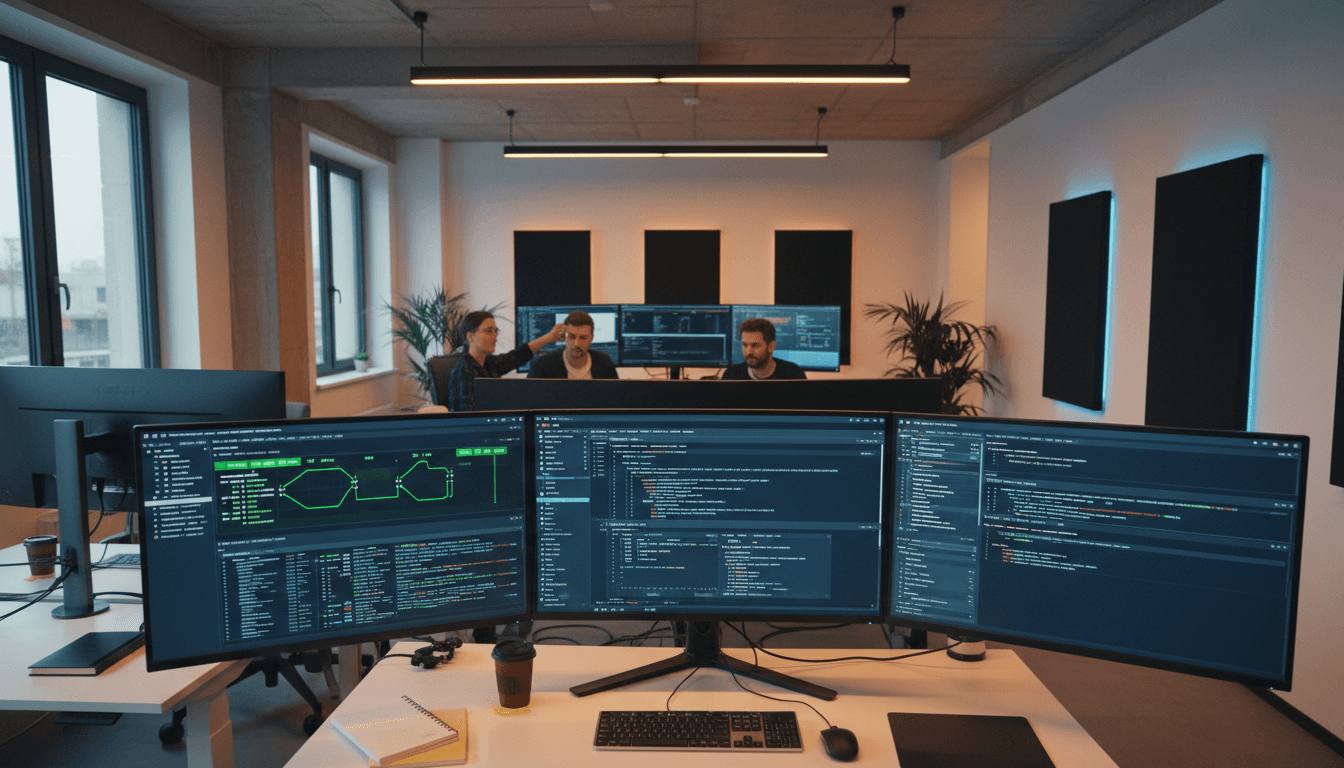
An AI-native strike team is a small, cross-functional unit (typically 4-8 people) that combines strategy, design, engineering, and AI/ML capability in a single team that delivers working software, not documents.
Key characteristics:
- Full-stack by design: the team includes strategists, designers, engineers, and AI specialists who work together daily, eliminating handoff gaps
- Embedded, not advisory: strike teams work inside your organization, alongside your people, using your systems and data -- not from a remote office producing deliverables for review
- Outcome-accountable: the team is measured on production deployment and business outcomes, not on deliverables produced or hours billed
- AI-accelerated: the team uses AI tooling throughout its workflow -- for code generation, testing, data analysis, documentation, and decision support -- which compresses timelines that traditional teams cannot match
- Time-boxed: strike teams operate in defined sprints (typically 6-12 weeks) with clear milestones, forcing prioritization and preventing scope creep
How Strike Teams Work in Practice
The strike team protocol differs fundamentally from traditional consulting engagement structures:
Week 1 -- Discovery and alignment: the full team (not just analysts) conducts rapid discovery. Engineers are in the room during stakeholder interviews. Designers observe actual user workflows. AI specialists assess data readiness. By end of week one, the team has a working understanding of the problem, the constraints, and the path to a deployable solution.
Weeks 2-4 -- Build the first working version: rather than producing a strategy deck, the team builds a functioning prototype integrated with real data sources and real systems. This prototype is not a demo -- it is the foundation of the production system, built with production-grade architecture from day one.
Weeks 5-8 -- Iterate and harden: the team iterates based on real user feedback on the working system, hardens for production, integrates with remaining systems, and builds monitoring and operations capabilities. Knowledge transfer happens continuously because your team is working alongside the strike team throughout.
Weeks 9-12 -- Production deployment and handoff: the system goes live. The strike team transitions ownership to your internal team, with documentation, runbooks, and pairing sessions that ensure your team can operate and extend the system independently.
Comparison: Strike Teams vs. Traditional Consultancies
The differences are measurable across every dimension that matters:
- Timeline to production: strike teams deliver in 6-12 weeks; traditional consulting plus implementation cycles take 6-18 months for equivalent scope
- Cost structure: strike teams are fixed-scope, outcome-based; traditional engagements are time-and-materials with scope expansion incentives
- Knowledge transfer: strike teams embed with your team daily, transferring skills through practice; traditional consultancies transfer knowledge through documents that your team must interpret independently
- Production readiness: strike teams deliver production-grade systems from sprint one; traditional deliverables require a separate implementation phase to become production-ready
- Risk profile: strike teams demonstrate viability within weeks through working software; traditional engagements carry months of investment risk before anything is testable
When to Use Which Model
Traditional consultancies still have a role. They are well-suited for:
- Large-scale organizational strategy that spans multiple business units and requires board-level alignment
- Regulatory and compliance advisory where the deliverable genuinely is analysis and recommendations
- Vendor evaluation and procurement advisory where independent assessment is the primary value
Strike teams are the right model when:
- You need working software, not a strategy document
- The timeline is measured in weeks, not quarters
- You need AI capabilities deployed in production, not evaluated in a slide deck
- Knowledge transfer to your internal team is a priority
- You are building digital products or deploying applied AI where execution speed determines competitive advantage
Case Patterns: Where Strike Teams Excel
Strike teams consistently outperform traditional models in scenarios like:
- AI pilot to production: taking a proven AI concept from pilot to production deployment, including data pipeline engineering, model deployment, monitoring, and integration with business systems
- Legacy system modernization: replacing or wrapping legacy systems with modern intelligent systems that integrate AI capabilities, done incrementally rather than as a multi-year big-bang replacement
- Rapid product development: building new digital products or features where speed to market matters and the team needs to iterate based on real user feedback, not requirements documents
- Data platform modernization: building the data infrastructure that AI applications depend on, with a focus on immediate utility rather than theoretical architecture
Closing the Execution Gap
The execution gap is not inevitable. It is the predictable result of delivery models that separate strategy from engineering, reward time spent over outcomes delivered, and measure success by documents produced rather than systems deployed.
Future Works operates AI-native strike teams that close this gap. Our teams combine strategy, design, engineering, and AI/ML capability in embedded units that deliver production software, not slide decks. We are accountable for outcomes, not hours, and we work on timelines measured in weeks, not quarters.
Stop Paying for Slides That Gather Dust
If you have a strategy deck that never became production software, or you are about to commission one, consider a different approach. Book a free strategy session to explore how a strike team engagement could deliver working software in the time it would take a traditional consultancy to finish its analysis phase.