.svg&w=256&q=75)

Next Gen Digital Transformation
Manufacturing 4.0 for Mid-Market: AI & IoT Use Cases Driving ROI

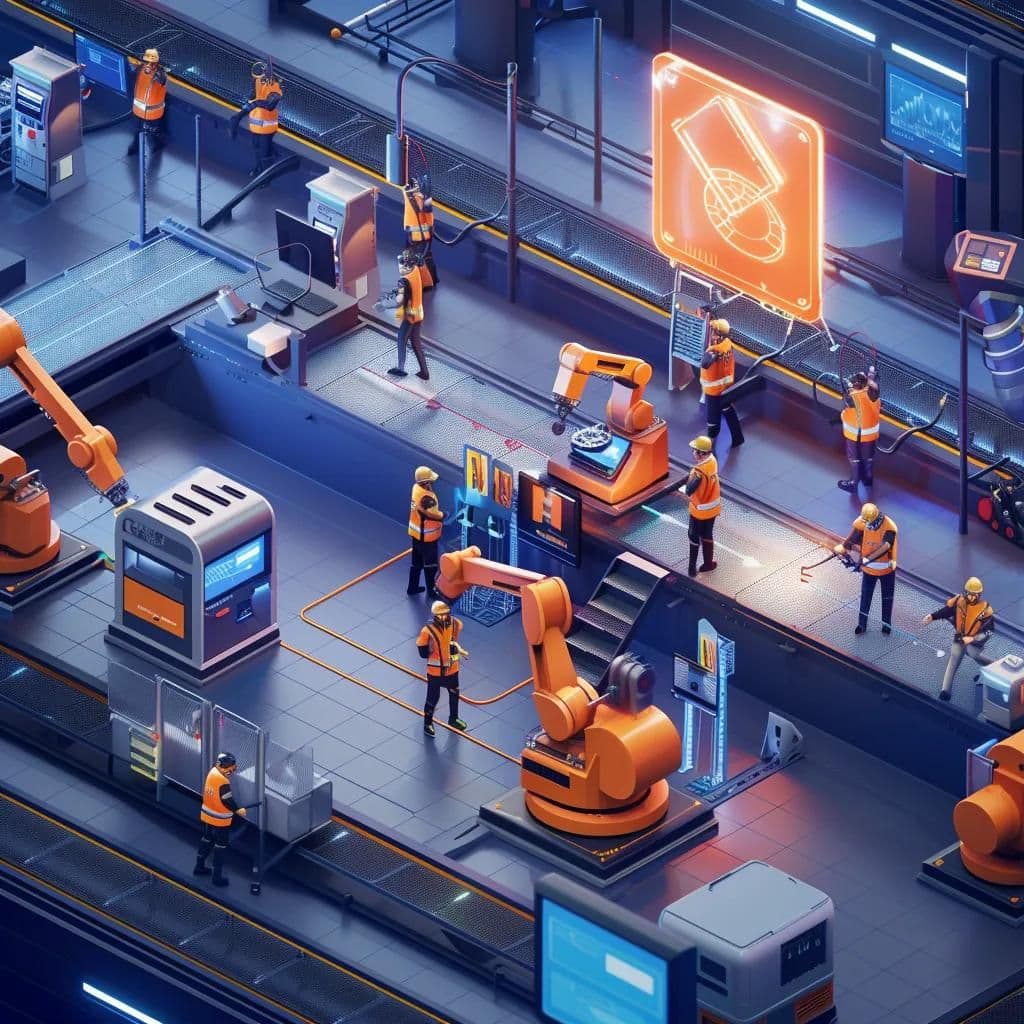
Manufacturing 4.0 in Action: Mid-Market Use Cases That Deliver Real Value with AI and IoT Solutions
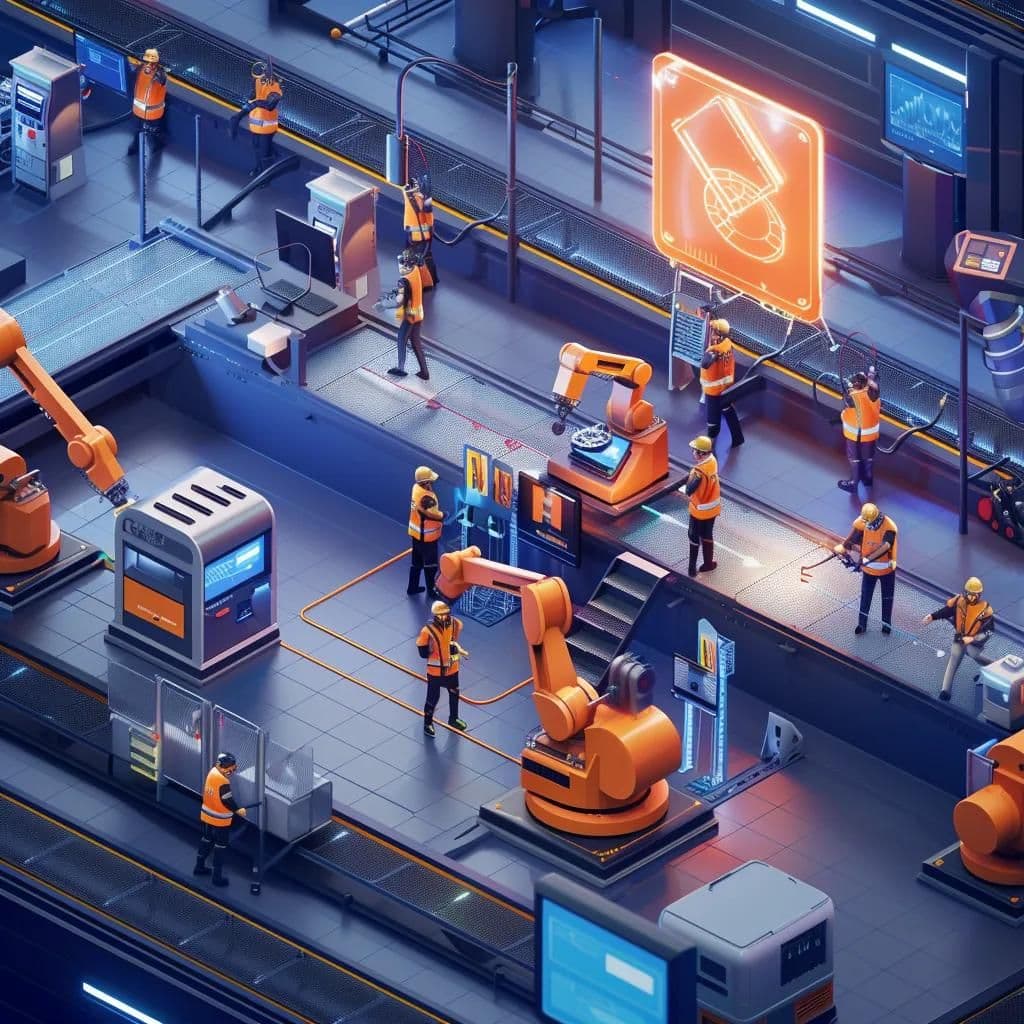
Manufacturing 4.0 is revolutionizing mid-market factories by integrating AI-driven analytics and IoT-enabled sensor networks to boost efficiency, quality, and profitability. With predictive maintenance slashing downtime by up to 50 percent and AI-powered inspection cutting waste by 20 percent, forward-thinking leaders can achieve rapid ROI while building more resilient operations. This guide dives into why mid-market manufacturers need Manufacturing 4.0 now, the essential technologies involved, top use cases that drive tangible results, practical implementation roadmaps, and how Future Works—your AI-native digital transformation partner—can accelerate your success. You'll discover:
- The urgency, benefits, and ROI of digital transformation
- Foundational AI, IoT, digital twin, and predictive maintenance technologies
- Five practical use cases for boosting efficiency, quality, visibility, simulation, and sustainability
- Step-by-step implementation and partner selection strategies
- How Future Works' AI-native support addresses common adoption hurdles
This structured overview provides a clear path from concept to execution, ensuring your mid-market operation thrives in the smart factory era.
Why Mid-Market Manufacturers Need Manufacturing 4.0 Today
Manufacturing 4.0 empowers mid-market companies with interconnected systems that streamline production, enhancing efficiency and competitiveness through real-time data and automation. As larger competitors embrace AI-driven processes, mid-sized firms face increasing margin pressure, making digital transformation a critical strategic imperative. Implementing advanced analytics and sensor-based monitoring leads to reduced cycle times, improved quality, and faster responses to market demand shifts. These foundational improvements pave the way for deeper technology integration, driving sustainable growth and operational agility.
What Competitive Edge Does Manufacturing 4.0 Offer Mid-Sized Companies?
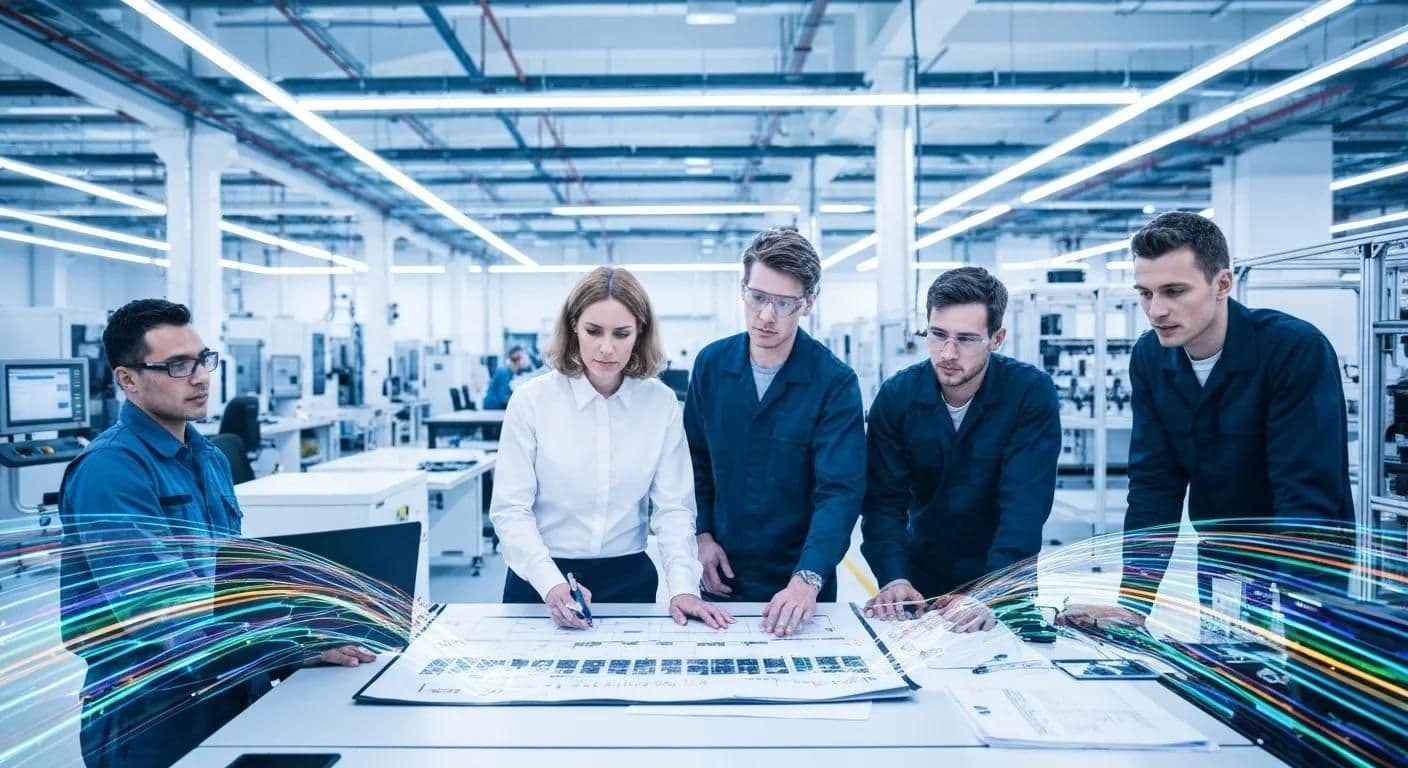
Manufacturing 4.0 delivers three key competitive advantages:
- Enhanced agility through real-time production insights
- Reduced unit costs via optimized resource utilization
- Faster time-to-market supported by adaptive scheduling
By connecting machines, materials, and workflows, smart factories foster data-driven decisions that accelerate innovation. This strategic positioning enables mid-market manufacturers to adapt to market shifts with precision and speed, opening new revenue streams and customer segments.
Key Advantages of Manufacturing 4.0
Manufacturing 4.0 provides three primary advantages: enhanced agility through real-time production insights, reduced unit costs via optimized resource utilization, and faster time-to-market supported by adaptive scheduling [28]. By connecting machines, materials, and workflows, smart factories drive data-informed decisions that accelerate innovation. The Industry 4.0 Effect: Why SMEs Should Adopt Smart Technologies Today (2022) This source highlights the advantages of Industry 4.0, including improved efficiency and increased profitability.
How Does Manufacturing 4.0 Elevate Operational Efficiency and Productivity?
AI-powered analytics and IoT sensor networks automate condition monitoring, enabling dynamic adjustments to production parameters and predictive scheduling. This approach boosts overall equipment effectiveness (OEE), minimizes idle time, and maximizes throughput. For instance, machine-learning models can identify potential bottlenecks before they impact operations, seamlessly reallocating workloads. These operational enhancements lead to targeted quality control improvements, further boosting yields.
What is the Anticipated Return on Investment (ROI) for Mid-Market Digital Transformation?
Mid-market manufacturers typically experience a 20–40 percent reduction in maintenance costs and a 10–25 percent increase in throughput within the first year of implementing Manufacturing 4.0. When AI-infused analytics and IoT integration are combined, the total ROI often surpasses 150 percent over three years. Quantifiable benefits, such as extended asset life, reduced scrap rates, and energy savings, underscore the strategic value of immediate investment, building a compelling case for phased adoption.
Projected ROI for Mid-Market Digital Transformation
Mid-market manufacturers typically realize a 20–40 percent reduction in maintenance costs and a 10–25 percent increase in throughput within the first year of implementing Manufacturing 4.0. When AI-infused analytics and IoT integration are combined, total ROI often exceeds 150 percent over three years [40]. Quantifiable benefits—such as extended asset life, lower scrap rates, and energy savings—validate the strategic value of immediate investment, creating a solid business case for phased adoption.
Predictive Maintenance in Manufacturing: ROI Guide & Implementation Steps (2025)
This source supports the assertion that predictive maintenance can deliver an ROI of approximately ten times the initial cost.
What Are the Foundational Technologies Driving Manufacturing 4.0 for Mid-Market Manufacturers?
Manufacturing 4.0 is built upon four core technology pillars—AI, IoT, digital twins, and predictive maintenance—creating a unified digital foundation that enhances every phase of the production lifecycle. These technologies work in concert to drive continuous improvement, from initial planning and simulation to real-time operations and ongoing service. A thorough understanding of their functions and benefits is crucial before deploying specific use cases.
How Does Artificial Intelligence Enhance Manufacturing Processes?
Artificial intelligence leverages machine-learning algorithms applied to production data to uncover patterns that optimize scheduling, quality control, and supply chain forecasting. By analyzing sensor streams and historical records, AI can predict equipment failures, recommend process adjustments, and enable autonomous decision-making. This intelligent layer boosts accuracy and responsiveness, unlocking new levels of operational excellence and cost savings.
What Role Does IoT Integration Play in Smart Factories?
IoT integration connects machinery, conveyors, and tools through embedded sensors, creating a networked ecosystem that provides real-time visibility into asset status, environmental conditions, and material flow. These data streams feed analytics engines, enabling condition-based monitoring and dynamic control loops. With open-protocol gateways and edge computing, IoT integration ensures the low latency and high reliability essential for mission-critical production environments.
How Do Digital Twins Facilitate Process Simulation and Optimization?
Digital twins are virtual representations of physical assets and processes that allow for performance simulation under various conditions. By mirroring machine behavior and production flows in software, engineers can test parameter changes, identify inefficiencies, and validate process improvements without disrupting the factory floor. This risk-free experimentation accelerates innovation and reduces the time required for commissioning new lines or products, reinforcing continuous improvement cycles.
What is Predictive Maintenance and How Does It Minimize Downtime?

Predictive maintenance utilizes IoT sensor data and machine-learning models to anticipate equipment health issues before failures occur. By analyzing vibration, temperature, and acoustic signatures, predictive systems schedule maintenance only when necessary, minimizing unplanned stoppages and reducing labor costs. This proactive strategy extends asset lifespan, enhances safety, and ensures consistent production output while lowering overall maintenance expenditures.
What Are the Top Manufacturing 4.0 Use Cases Delivering Tangible Results for Mid-Market Companies?
Focusing on practical applications, five key use cases deliver rapid, measurable improvements for mid-sized factories: predictive maintenance, AI-powered quality control, IoT integration for enhanced visibility, digital twin optimization, and energy management for sustainability. These applications demonstrate the direct link between technology adoption and profitability, laying the groundwork for broader transformation.
How Does Predictive Maintenance Eliminate Downtime and Extend Asset Life?
Predictive maintenance anticipates equipment issues by continuously monitoring vibration, temperature, and operational metrics.
- Predicts failure modes using advanced analytics
- Schedules repairs based on real-time equipment condition
- Reduces unplanned stoppages by up to 50 percent
Benefits of Predictive Maintenance
Predictive maintenance anticipates equipment issues by continuously monitoring vibration, temperature, and operational metrics. Predictive analytics-driven maintenance not only slashes downtime but also informs strategic resource allocation, setting the stage for data-driven quality control improvements [45].
Preventive and Predictive Maintenance: Which Asset Management Strategy Has the Best ROI for You?, RV Magnetics (2022)
This source confirms that predictive maintenance activities implemented by asset managers lead to reduced breakdowns and minimized downtime.
How Can AI-Powered Quality Control Boost Yields and Reduce Waste?
AI-powered vision systems detect defects in real time by analyzing high-resolution images and comparing them against trained models.
- Capture live images of products on the production line.
- Identify anomalies with over 98 percent accuracy.
- Trigger alerts for out-of-tolerance items.
AI-Powered Quality Control
AI-powered vision systems detect defects in real time by analyzing high-resolution images and comparing them against trained models [2, 7]. Automated inspection accelerates throughput and reduces rework costs, highlighting the importance of smart sensor networks and advanced analytics for comprehensive quality assurance.
How is AI revolutionizing Quality Control in manufacturing?, Körber Digital (2024)
This source supports the claim that AI systems, equipped with computer vision, can analyze product images in real time, identifying defects that may be imperceptible to the human eye.
What Are Effective IoT Integration Strategies for Mid-Sized Factories?
Successful IoT integration involves:
- Mapping critical assets and data points
- Deploying wireless or wired sensors with open-protocol gateways
- Implementing edge computing for localized data processing
- Aggregating data in cloud platforms for advanced analytics
IoT Integration Strategies
Successful IoT integration involves mapping critical assets and data points, deploying wireless or wired sensors with open-protocol gateways, implementing edge computing for local processing, and aggregating data in cloud platforms for analytics [14]. This modular approach minimizes disruption, enables incremental scaling, and provides immediate operational visibility, which is essential before deploying advanced AI applications.
IoT Devices for Manufacturing: 3x Your Factory Productivity, Thinaer (2024)
This source supports the assertion that IoT helps connect machines, analyze data, and automate business processes in the physical world.
How Do Digital Twin Applications Optimize Manufacturing Processes?
Digital twins create synchronized software models of production lines, enabling "what-if" scenario analysis and virtual commissioning. Factories can simulate:
- Changes in production rates
- Introduction of new products
- Adjustments to equipment layouts
By validating changes in the digital environment, mid-market manufacturers reduce the need for physical testing, avoid costly errors, and accelerate the time-to-value for new initiatives.
Digital Twin Applications
Digital twins create synchronized software models of production lines, enabling “what-if” analyses and virtual commissioning [6, 8]. By validating changes in the digital realm, mid-market manufacturers reduce physical testing time, avoid costly errors, and accelerate time-to-value for new initiatives.
Digital Twin Applications in Manufacturing Industry: A Case Study from a German Multi-National, MDPI (2024)
This source supports the application of digital twins in manufacturing and their associated benefits.
How Can Energy Management Enhance Sustainability in Smart Factories?
Energy management platforms utilize IoT sensors and analytics to monitor consumption at the machine, line, and facility levels. Predictive algorithms identify peak demand periods, suggest load-shifting strategies, and optimize HVAC, lighting, and compressed-air systems. These measures can reduce energy costs by up to 15 percent and support corporate sustainability objectives while improving overall process efficiency.
Energy Management for Sustainability
Energy management platforms use IoT sensors and analytics to monitor consumption at machine, line, and facility levels [1, 16]. These measures cut energy costs by up to 15 percent and support corporate sustainability goals while enhancing overall process efficiency.
The Role of Energy Management Systems in Smart Factories, Prescient Technologies (2024)
This source supports the claim that a smart energy management system is crucial for optimizing energy consumption and improving efficiency in smart factories.
How Can Mid-Market Manufacturers Achieve Success with Manufacturing 4.0 Implementation?
A phased, risk-managed roadmap ensures predictable outcomes and stakeholder buy-in. Defined steps—assessment, pilot projects, scaling—minimize disruption and maximize ROI, establishing a robust foundation for ongoing innovation.
What Are the Key Stages in a Phased Digital Transformation Roadmap?
A typical roadmap includes the following stages:
- Discovery and readiness assessment of existing systems
- Proof-of-concept pilot targeting a high-impact use case
- Scaled rollout with integration into ERP/CMMS systems
- Continuous improvement driven by data feedback loops
Phased Digital Transformation Roadmap
A typical roadmap follows: discovery and readiness assessment of existing systems, proof-of-concept pilot targeting high-impact use case, scaled rollout with integration into ERP/CMMS, and continuous improvement using data feedback loops [35]. This structured approach balances quick wins with sustainable capability building and fosters cross-functional alignment.
Industry 4.0 Roadmap: 5 Steps to Advance on the Path to Innovation, Decide Soluciones (2024)
This source advocates for a roadmap that encompasses all phases from technological discovery to implementation, team training, results analysis, and achieving planned ROI.
How Can Pilot Projects Demonstrate Value Before Full-Scale Adoption?
Pilot projects focus on specific lines or assets to validate ROI on a smaller scale. By measuring key performance indicators—such as downtime reduction, quality improvement, and energy savings—mid-market teams build confidence and secure stakeholder support. Successful pilots generate documented case studies that guide broader deployment efforts
What Criteria Should Mid-Market Companies Use When Selecting Technology Partners?
Mid-market manufacturers should prioritize partners who offer:
- Proven AI-native expertise within the manufacturing sector
- Flexible, modular solutions that integrate seamlessly with existing systems
- Clear ROI case studies and quantifiable success metrics
- Collaborative support models that include comprehensive training and change management
Partner Selection Criteria for Technology
Mid-market manufacturers should prioritize partners who offer proven AI-native expertise in manufacturing, flexible, modular solutions that integrate with legacy systems, clear ROI case studies and quantifiable success metrics, and collaborative support models that include training and change management [20, 21]. These criteria ensure alignment with business objectives and technical realities.
The AI Native Revolution: A New Business Paradigm, FPT AI (2025)
This source highlights AI-native as a crucial keyword in discussions about the future of business operations
How Does Future Works Support Mid-Market Manufacturers on Their Manufacturing 4.0 Journey?
Future Works combines in-depth AI research with practical manufacturing experience to accelerate digital transformation efficiently. As an AI-native firm, Future Works embeds advanced machine-learning models and IoT frameworks directly into client operations, delivering measurable business outcomes from the outset.
What Unique AI-Native Capabilities Does Future Works Bring to Digital Transformation?
Future Works’ proprietary AI models integrate with IoT sensor networks to provide real-time anomaly detection, adaptive scheduling, and intelligent material flow control. This AI-first methodology surpasses traditional rule-based systems by continuously learning and self-optimizing, ensuring sustained efficiency gains.
How Has Future Works Delivered Quantifiable ROI for Mid-Market Clients?
In recent projects, Future Works assisted a mid-sized automotive parts manufacturer in reducing downtime by 35 percent within six months and increasing yield by 12 percent through AI-driven quality inspection. These results were validated against baseline KPIs, demonstrating clear payback and strong support for further transformation initiatives
Why Is Partnering with an AI-First Firm Crucial for Mid-Market Growth?
Unlike conventional consultancies, Future Works designs solutions where AI and IoT are integral from the initial concept, ensuring seamless scalability and continuous performance improvements. This accelerated innovation cycle empowers mid-market companies to remain competitive, capture new markets, and achieve exponential growth. Discover how Future Works can catalyze your Manufacturing 4.0 journey by exploring our services and scheduling a personalized consultation.
What Are Common Challenges Mid-Market Manufacturers Encounter in Manufacturing 4.0 Adoption?
Adopting advanced technologies in mid-market environments often faces hurdles related to legacy systems, budget limitations, and workforce preparedness. Addressing these challenges proactively is key to a smooth transformation and sustained success.
How Can Legacy System Integration Be Overcome with AI and IoT?
Integrating AI and IoT with legacy PLCs and ERP systems necessitates the use of open-protocol gateways, middleware adapters, and edge-computing nodes designed to translate and preprocess data.
Overcoming Legacy System Integration Challenges
Integrating AI and IoT with legacy PLCs and ERP systems requires open-protocol gateways, middleware adapters, and edge-computing nodes that translate and preprocess data [13, 26]. This layered approach preserves existing investments while enabling real-time analytics and remote monitoring capabilities.
Adopting Industry 4.0 in Aerospace and Automotive composites manufacturing: 5 challenges & practical tips, Plataine (2021)
This source addresses the challenges of Industry 4.0 adoption, including the integration of new technologies with existing legacy systems.
What Budget Constraints Affect Mid-Sized Companies, and How Can They Be Managed?
Mid-market manufacturers often have limited capital for substantial digital investments. Phased rollouts, pilot funding models, and outcome-based pricing strategies align technology expenditures with realized benefits, enabling cost-effective scaling without straining budgets.
How Can Workforce Transformation Support Digital Factory Success?
Digital transformation thrives when teams embrace new processes and tools. Structured training programs, effective change-management initiatives, and collaborative dashboards build digital fluency, empowering employees to utilize AI insights and IoT platforms as integral parts of their daily operations.
Frequently Asked Questions About Manufacturing 4.0 for Mid-Market Use Cases
What Are the Benefits of Industry 4.0 for Mid-Sized Manufacturers?
Industry 4.0 delivers reduced operational costs, enhanced productivity, improved product quality, minimized downtime through predictive maintenance, and increased supply chain visibility—all culminating in strong, measurable ROI.
How Does AI Improve Manufacturing Efficiency in Mid-Market Companies?
AI enhances manufacturing efficiency by forecasting equipment failures to prevent unplanned stoppages, dynamically balancing production loads, automating quality inspection, and streamlining logistics, leading to higher throughput and reduced operating expenses.
What is the ROI of Predictive Maintenance for Mid-Market Factories?
Predictive maintenance offers 10–40 percent lower maintenance costs, 50 percent less downtime, and up to a 40 percent extension in asset lifespan, typically providing a payback period of under 12 months for mid-market implementations.
How Can IoT Integration Enhance Supply Chain Visibility?
IoT integration consolidates real-time data on inventory, shipments, and production status, enabling accurate demand forecasting, automated replenishment alerts, and end-to-end traceability that reduce stockouts and expedite order fulfillment.
What Are Practical Examples of Digital Twin Applications in Manufacturing?
Digital twins facilitate the simulation of product changeovers, validation of new line installations, and testing of maintenance strategies before physical implementation. For example, a digital twin enabled a packaging manufacturer to reduce commissioning time by 30 percent and minimize layout errors.Transforming your mid-market factory with Manufacturing 4.0 not only yields immediate operational advantages but also establishes a data-driven foundation for continuous innovation and growth. Partner with Future Works to unlock the full potential of AI and IoT within your production environment.
---
Related pages on Future Works: